
We selected a list of 52 of the best business books we ever read: award winning stories of business titans and fallen angels, breakthrough innovations, wealth, bankruptcy, innovation and failure.
As communication professionals, we add value by understanding the strategic challenges of our clients. We can only understand those if we understand the business model of our clients.
This reading list will help any communication professional working for business clients to have a broad understanding of topics like the importance of vision and mission, innovation and disruption, corporate finance, mergers and acquisitions, working with boards and C-level, management issues, supply chain, growth and change.
Above all, these are enjoyable books, written by great storytellers.
Business biographies
- The Richest Man Who Ever Lived: the Life and Times of Jacob Fugger
Jacob Fugger was the banker of Renaissance Europe, funding monarchies all over the continent and – crucially – managing to get paid back. He built his wealth on what became the most successful public affairs campaign of history: getting the pope to give his blessing to charging interest on loans.
- The Fish That Ate the Whale: The Life and Times of America’s Banana King
Banana republics – you’ve heard of those? What’s less known is that bananas were a great startup opportunity in the late 19th century. This is the story of an entrepreneur and hustler who started out as a longshoreman and died a banana king. Interesting for the similarity in patterns to modern software startups – and the similar maturing of the tech industry.

- Breaking Rockefeller: The Incredible Story of the Ambitious Rivals Who Toppled an Oil Empire
The history of an ambitious and audacious London merchant who took on John D. Rockefeller at the height of his power – and won. The origins of the Royal Dutch Shell Company.
- The Box: How the Shipping Container Made the World Smaller and the World Economy Bigger
A mind blowing book about the transformative power of innovation. Container shipping changed the world, gradually and then suddenly – a typical pattern in innovation and a valuable perspective when looking at present-day innovation.
- Barbarians at the Gate: The Fall of RJR Nabisco
Considered one of the best business stories ever written, this book is a thriller about the mega-deals that defined the eighties. However it is still highly relevant today, as some innovations in financing, debt, M&A and private equity are still in use today.
- Den of Thieves
Another Pulitzer Prize winner. The cast of characters from “Barbarians at the Gate” hit a wall later in the eighties as a huge insider trading scandal was uncovered. Stewart shows how four of the eighties’ biggest names on Wall Street—Michael Milken, Ivan Boesky, Martin Siegel, and Dennis Levine —created the greatest insider-trading ring in financial history and almost walked away with billions.
- Skadden: Power, Money and the Rise of a Legal Empire
Goes great with “Barbarians at the Gate” and “Den of Thieves”: the story of how Joseph Flom became the go-to lawyer for anyone dealing with M&A. It’s also a great example of what Clayton Christensen calls “disruptive innovation”: Skadden started out doing the type of clients no white shoe firm would touch (hostile takeovers) – and built a new industry on top of that business
- The Snowball: Warren Buffett and the Business of Life
Offers an insight into the mind of the most successful investor of all time – Warren Buffett. It will show readers the importance of business models, especially when it comes to cash flow and working capital (especially the magical properties of so-called “float”).
Retail
Some business stories about retail that you should probably read in their chronological order:
- The Great A&P and the Struggle for Small Business in America
Today, Amazon is the big bad wolf in retail. In the eighties it was Wal-Mart. But long before them, the A&P was the subject of hot debate and intense regulatory scrutiny. What is interesting in this book is that it shows the disruptive power of a well executed mix of low prices, innovation and quality.
- Sam Walton: Made in America
Not quite objective and at times schmalzy for non-US readers, but quite insightful: the autobiography of Sam Walton, the father of Wal-Mart – the most ambitious, and most successful mom and pop store in history.
- The Everything Store: Jeff Bezos and the Age of Amazon
A new technological era, a new retail era
- Alibaba: The House That Jack Ma Built
Slightly less well written than some of the best business books out there, but it wouldn’t do to ignore Alibaba in this list.
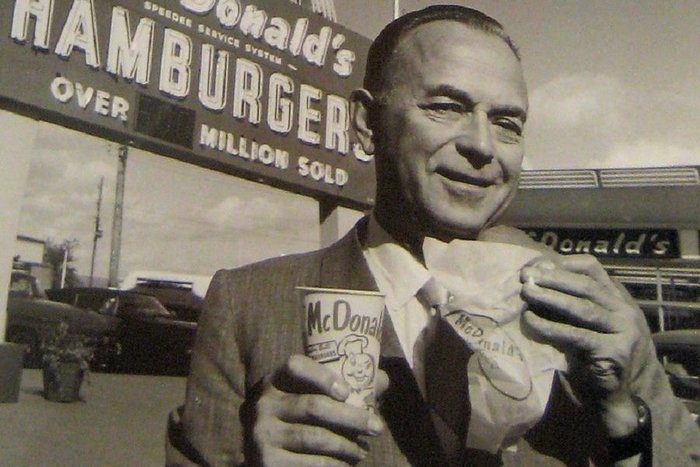
- Grinding It Out: The Making of McDonald’s
Ray Kroc was a business genius, and McDonald’s was his creation. How a salesman went from selling blenders to burgers.
- Onward: How Starbucks Fought For Its Life without Losing Its Soul
The “autobiography” of Starbucks by founder Howard Schultz
- Shoe Dog: a Memoir by the Creator of Nike
Phil Knight saw a future where everybody would run, and everybody would wear sneakers to work. Like Starbucks, Nike managed to not just capture the Zeitgeist, but create it.
And lest you think all retail stories end with riches, well, some end with rags:
- Flameout: The Rise and Fall of Burger Chef
In 1971, Burger Chef Systems commanded an empire of 1,200 restaurants, adding one every 48 hours. Less than 100 locations stood between them and slower-growing McDonald’s Corporation. They were winning big. Until they weren’t. A “could have been”.
- Good to Great to Gone: The 60 Year Rise and Fall of Circuit City
Circuit City was one of the retail greats, but it stumbled – and then it fell. A chronicle by once-CEO Alan Wurtzel.
Private equity, venture capital, hedge funds
- When the Wolves Bite: Two Billionaires, One Company, and an Epic Wall Street Battle
In understanding what drives business strategy, it’s important to look at shareholders too. Financial innovations and trends have also shaped business strategy and will continue to do so. Private equity, venture capital and hedge funds have been major players in the last decades, and it is worthwile to understand how they operate and what drives them.
Technology – early 20th century to the sixties

- The Wizard of Menlo Park: How Thomas Alva Edison Invented the Modern World
You can’t really understand innovation if you haven’t read about Thomas Edison, the father of GE who wasn’t always the most astute businessman. A look at the man and the myths.
- The Maverick and His Machine: Thomas Watson, Sr. and the Making of IBM
You can’t read this book and not be impressed with Thomas Watson’s sense of timing – Watson bet the company three or four times in his lifetime, dramatically changing the course of the company – and was right every time. Also informative for anyone trying to create a corporate culture – who knew that IBM had a song book with “Songs of the IBM”, that was actually a big hit inside the company?
- The Idea Factory: Bell Labs and the Great Age of American Innovation
Before there was Xerox PARC, there was Bell Labs. The transistor, the laser, cellular telephony – it was all invented here.
Technology – 1960-1990 – the origins of Silicon Valley
- The Soul of A New Machine
In 1981, a team of engineers must develop a new computer in a race against time – and another team of engineers inside their own company. A Pulitzer Prize winning description of the highs and lows of innovation. A fantastic read and a look into the soul of not just machines, but the obsessed engineers who develop them.
- Intel Trinity,The: How Robert Noyce, Gordon Moore, and Andy Grove Built the World’s Most Important Company
The tip of the spear of technological innovation presents huge business opportunities, but also huge risks: one wrong bet can mean life or death for a company. The Intel story makes that abundantly clear
- Dealers of Lightning: Xerox PARC and the Dawn of the Computer Age
Did Steve Jobs really “steal all his innovations from Xerox PARC”? An inside look at the highs and lows of Xerox PARC, where the first PC, the laser printer and the graphical interface were invented.
- Steve Jobs
Needs no explanation.
- The New New Thing: A Silicon Valley Story
As everything written by Michael Lewis, this is a delicious book on Jim Clark, the Silicon Valley legend who expertly times his entry and exit in a number of crucial industries and companies. See also: Netscape, Pixar, LucasFilms.
- Idea Man: A Memoir by the Co-founder of Microsoft
The other Microsoft founder – and currently involved in the race for space with BlueOrigin (Bezos) and SpaceX (Musk).

- Console Wars: Sega, Nintendo, and the Battle that Defined a Generation
How Sega almost beat Nintendo – but didn’t. A fascinating look at the gaming industry in the ’90s.
Hollywood & content
- Cable Cowboy: John Malone and the Rise of the Modern Cable Business
Not strictly Silicon Valley but at the same time crucial to understand Netflix and SaaS models. Malone invented a new business model – and it took years if not decades before the stock market understood his approach of sinking every newly earned dollar into reckless growth. In a way, Malone invented the blueprint for SaaS growth patterns. At the same time, this book shows the tense relationship between content and distribution, as well as regulation and oligopoly.
- Netflixed: The Epic Battle for America’s Eyeballs
Today, Reed Hastings is hailed as a business genius and a titan in the industry – it’s hard to remember that Netflix started out in 1997 as a DVD rental-by-snailmail company . The most fascinating thing about this book is the inability of Blockbuster to define an answer to a tiny upstart. (Spoiler: the upstart won)
- Creativity, Inc.: Overcoming the Unseen Forces That Stand in the Way of True Inspiration
Another time the upstart won: the story of Pixar – or how a small, tech driven studio basically swallowed Disney in the end. Also, Pixar was crucial in re-establishing Steve Job at Apple.
- DisneyWar
When you’ve finished Creativity Inc, might as well take a look at the epic fight between Michael Eisner and, well, basically the whole world. See also: Michael Ovitz.
- Powerhouse: The Untold Story of Hollywood’s Creative Artists Agency
Michael Ovitz and his partners redefined Hollywood with their ultra-aggressive approach to talent agenting: they simply wanted all the top talent. The story of Creative Artists Agency.
- Who is Michael Ovitz?
You could consider it the sequel to “Powerhouse”, written by the protagonist, Michal Ovitz. Ovitz’ CAA (Creative Artists Agency) rewrote the rules for talent agencies in the eighties and nineties, becoming a global powerhouse. Ovitz reinvented the business by becoming a packaging house for talent and ideas, and by cornering the talent market, flipping the power structure from the studios and networks to the agents representing the talent.
- The Song Machine: Inside the Hit Factory
A revealing look at the process behind pop music. How a couple of Swedish producers redefined the industry.
Contemporary Silicon Valley
- The Hard Thing About Hard Things: Building a Business When There Are No Easy Answers
Today, Ben Horowitz is known as the man behind Andreessen Horowitz. Back then, he was an entrepreneur trying to keep his startup alive. Read this and you’ll understand why Horowitz prefers funding companies to running them.
- The Upstarts: How Uber, Airbnb, and the Killer Companies of the New Silicon Valley Are Changing the World
Already a bit aged in its central thesis (“bad boy Uber vs nice guy Airbnb”), nevertheless a very interesting “neartime” biography of Uber and Airbnb.
- Bad Blood: Secrets and Lies in a Silicon Valley Startup
Elizabeth Holmes was “the New Steve Jobs” – until she wasn’t. The story of Theranos is a cautionary tale about the limits of “fake it till you make it”.
- Behind the Cloud: The Untold Story of How Salesforce.com Went from Idea to Billion-Dollar Company-and Revolutionized an Industry
How Marc Benioff built Salesforce – autobiography
- Elon Musk: Tesla, SpaceX, and the Quest for a Fantastic Future
Another “neartime” biography of an unfolding business legend
- Digital Gold: Bitcoin and the Inside Story of the Misfits and Millionaires Trying to Reinvent Money
Written before the crypto bubble: another neartime biography of a phenomenon
- Hatching Twitter: A True Story of Money, Power, Friendship, and Betrayal
Did Twitter “drive a clown car into a gold mine” as Mark Zuckerberg famously asserted? In any case, the early years of Twitter weren’t pretty
- Marissa Mayer and the Fight to Save Yahoo!
Marissa Mayer was a phenomenon: a look at the halo effect
Professional services
- Managing The Professional Service Firm
A classic and the reference on professional services
- Art’s Principles: 50 Years of Hard-Learned Lessons in Building a World-Class Professional Services Firm
Arthur Gensler is the founder of Gensler, one of the largest architecture and design firms in the world. In the book, he explains the principles of building a lasting culture of excellence for a professional services firm.Business strategy
- Good Strategy, Bad Strategy
The word “strategy” is used so often that it became devoid of meaning. Richard Rumelt cuts through the noise and explains, in simple terms and with powerful examples, what strategy is, and what it is not. Recommended for anyone who has to use or hear the word “strategy” in their professional life.
- Competing Against Luck: The Story of Innovation and Customer Choice
You can’t talk about innovation without knowing Clayton Christensen, who coined the term “disruptive innovation” as well as “job to be done”, two crucial concepts to contemporary business.
- Good to Great: Why Some Companies Make the Leap…And Others Don’t
Jim Collins understands how to make data come to life in compelling “just so” stories. Good to great is one of a 5 book series that also includes “Built to last” and “How the Mighty Fall”
- The Machine That Changed the World: The Story of Lean Production– Toyota’s Secret Weapon in the Global Car Wars That Is Now Revolutionizing World Industry
A classic for everyone who’s interested in the nuts and bolts of industry: how Toyota reinvented manufacturing, and became the biggest auto maker in the world in the process. Impeccably researched, as it is based on a 5 year, 5 million $ MIT study.
- American Icon: Alan Mulally and the Fight to Save Ford Motor Company
Goes great with the story of Toyota and lean: the fight for survival of Detroit, as described through the experience of Alan Mulally who became CEO of Ford Motor Company in 2008. Mulally managed to switch Ford from a supply driven company to a demand driven company, no mean feat – while preaching to his team members to “trust the process”.
- The Infinite Resource: The Power of Ideas on a Finite Planet
If you want to understand Silicon Valley and techno-optimism, it’s worthwile to look at the thinking of Ramez Naam, one of the brains behind the Singularity University
- What the Dog Saw: And Other Adventures
A collection of New Yorker articles of Malcolm Gladwell. Gladwell is known as the “Jesus of business writing” (Scott Galloway) and he did write some of the best short form business stories – emphasis on story rather than business. His story on Ron Popeil, the daytime tv sales genius, is a classic – and deservedly so.
Design
- The Design of Everyday Things
Another classic for anyone who wants to understand design
Got any other highly enjoyable business books? Let us know in the comments!
